
Biomedical Research
Berkeley Lab Scientists Build Machine Learning Radiation Blood Test
The open-source Sparse CBC model achieved over 80% accuracy across 1,500+ mice, detecting radiation doses as low as 0.05 gray up to 150 days post-exposure.
Your listening Queue & catch up
Add a story or build a catch-up queue to start listening.
Researchers at Lawrence Berkeley National Laboratory, affiliated with UC Berkeley, have developed an open-source machine learning tool called Sparse CBC that estimates radiation exposure from a routine Complete Blood Count (CBC) blood test, The Daily Californian reported Monday.
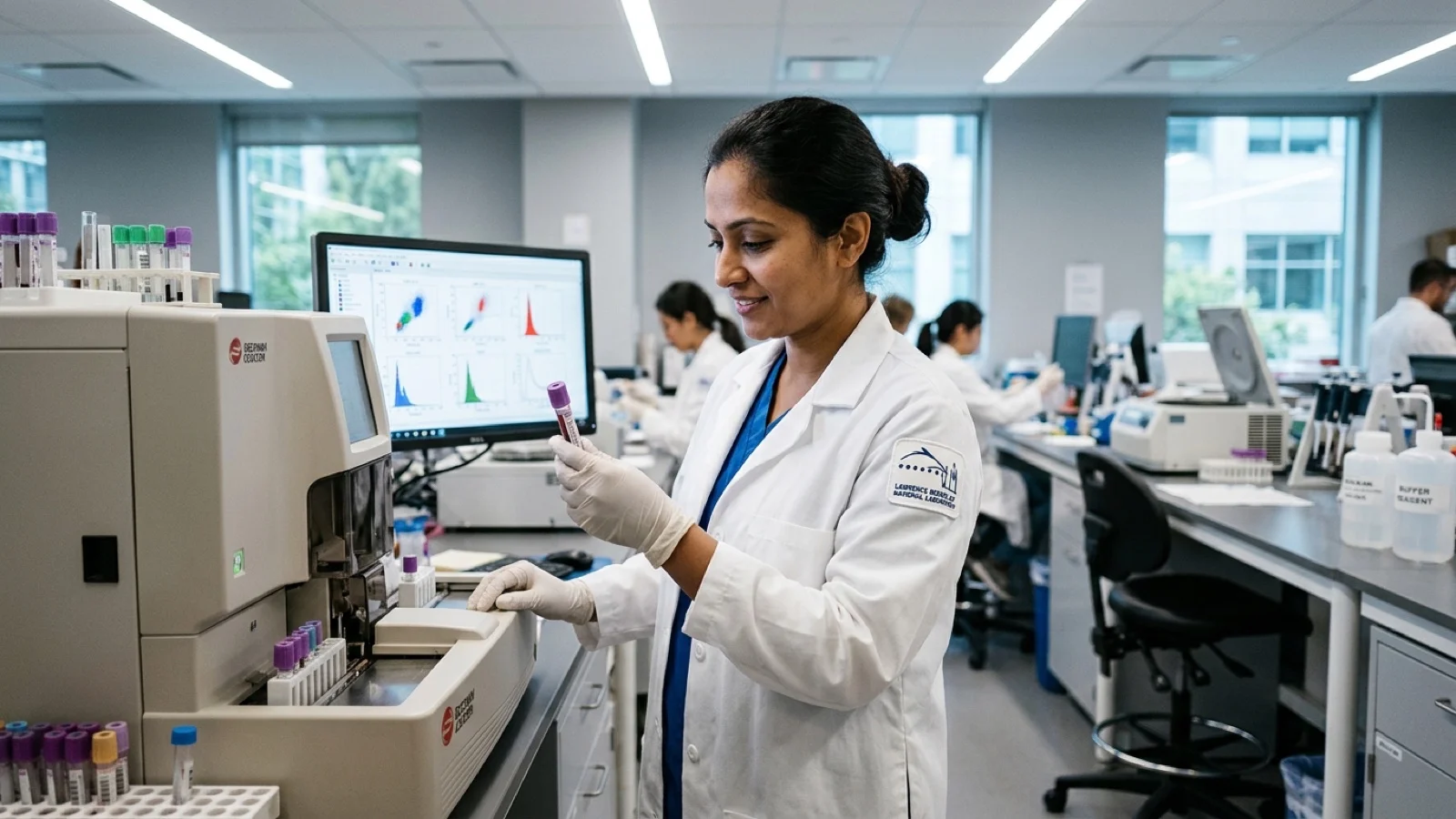
The research team — geneticist and senior scientist Jian-Hua Mao, project scientist Jamie Inman, and senior scientist Hang Chang — designed the model to overcome the bottlenecks of conventional radiation biodosimetry. Traditional chromosomal analysis requires specialized laboratory equipment and days of processing, whereas CBC tests are already performed on standard hematology analyzers in hospitals and clinics worldwide.
"Because the CBC test is already part of routine medical care, Sparse CBC makes it possible to quickly assess large populations after a radiation incident using existing clinical infrastructure," Mao told The Daily Californian.
Over 80% Accuracy Down to 0.05 Gray
To train and evaluate the Sparse CBC algorithm, the Berkeley Lab team compiled blood cell measurements from more than 1,100 mice exposed to varying levels of radiation over a five-month period. The researchers then conducted a double-blind validation study using 431 additional mice whose radiation doses were hidden from the modeling team.
In the double-blind evaluation, Sparse CBC achieved more than 80% accuracy and sensitivity in classifying radiation exposure. The model detected radiation doses as low as 0.05 gray and identified biological signatures of exposure up to 150 days after irradiation.
Open-Source Release for Clinical Validation
According to Chang and Inman, the team released the Sparse CBC model as open-source software so outside laboratories and medical institutions can validate and adapt the algorithm for human clinical cohorts, including cancer patients undergoing radiotherapy and astronauts exposed to cosmic radiation.
Sources
Comments (0)
No comments yet. Be the first to share a thought on this story.